Marketing Intelligence
Influencer Marketing · 1 de julio de 2026 · 12 min de lectura
Most enterprise influencer campaigns default to the platform where the brand already has an organic account, or to the platform the CMO is most familiar with. Neither is a defensible allocation. The three major platforms — Instagram, TikTok, and YouTube — have genuinely different engagement patterns, audience compositions, and campaign strengths, and picking the wrong one for a specific campaign objective can quietly cut the ROI by half. Here is what the three platforms actually do best, how to match platform to campaign objective, and how enterprises are building a cross-platform allocation framework that stops leaving performance on the table by picking the wrong platform out of habit.
Most enterprise influencer campaigns default to the platform where the brand already has an organic account. If the brand's home base is Instagram, the campaign runs on Instagram. If TikTok is where the team has been posting most recently, TikTok gets the budget. If the CMO grew up in the YouTube-native era, YouTube keeps winning the internal debate. None of these defaults are defensible allocation logic. All of them show up in briefs anyway.
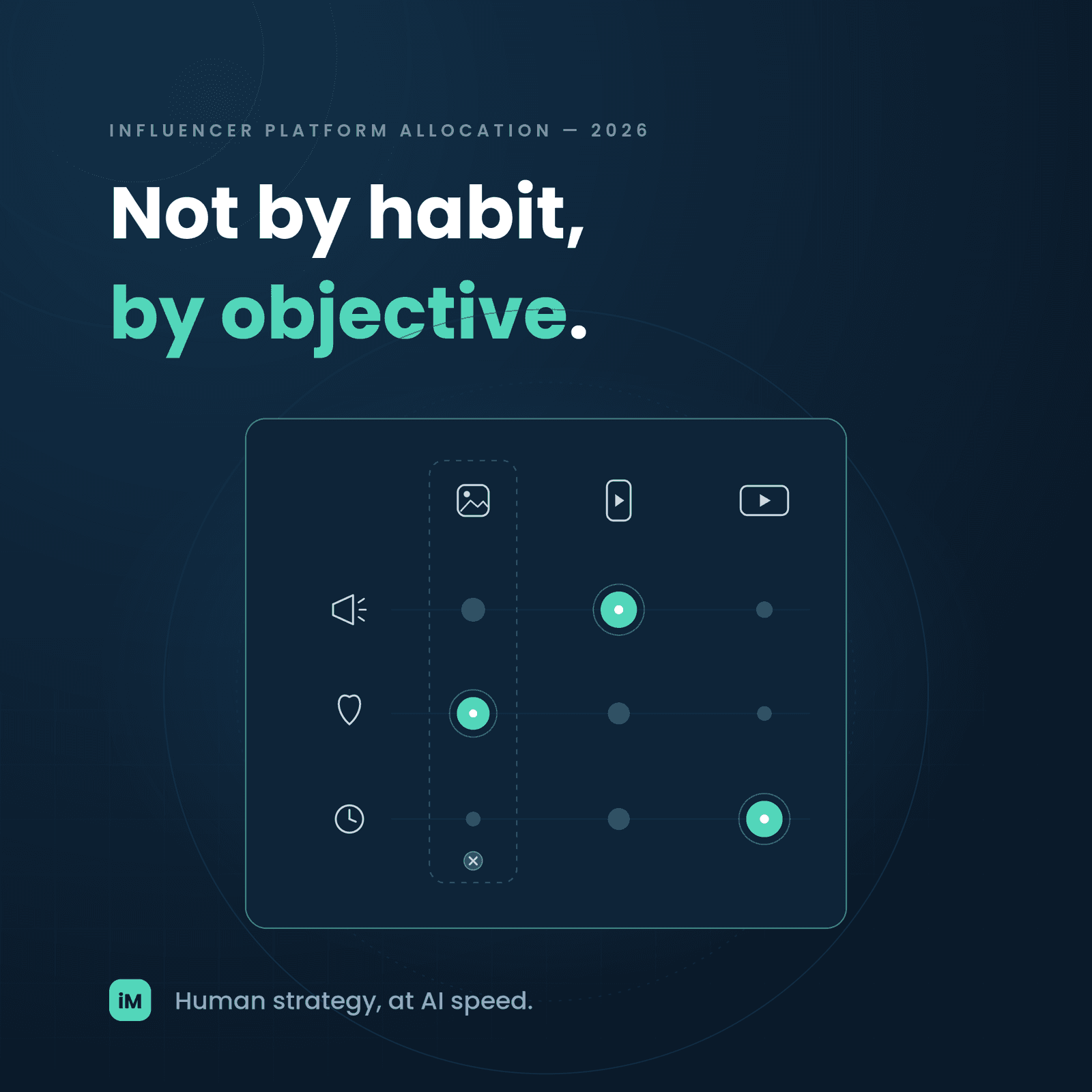
The three major platforms — Instagram, TikTok, and YouTube — have genuinely different engagement patterns, audience compositions, content formats, and campaign strengths. A brand-awareness campaign that would work well on TikTok can underperform on Instagram; a product-explanation campaign that thrives on YouTube can misfire on TikTok; a lifestyle-adjacent campaign that lives on Instagram can look off-brand on YouTube. Picking the wrong platform for a specific campaign objective does not just reduce the campaign's ceiling — it can quietly cut the ROI by half.
In 2026 the enterprises running influencer programs at scale have moved past the default-platform habit and toward a per-campaign platform selection process. Not because they have chosen a favorite platform, but because they have accepted that the platform is a variable to be chosen deliberately against the campaign's objective. This piece walks through what each of the three major platforms actually does best in operational terms, how the campaign objective decides which platform earns the placement, and how enterprises are building a cross-platform allocation framework that stops leaving performance on the table.
Each of the three platforms has a shape that emerges from its content format, its algorithm, and its user behavior. Understanding the shape of each platform is what lets enterprises match platform to objective, and the shape does not change fast enough for the mapping to be constantly obsolete.
Instagram's core content unit is a curated visual — either a still image or a short-form video with a strong visual composition. The platform's algorithm rewards content that people save, share to Stories, or spend time on within Reels. Instagram audiences engage with content that says something about the brand's identity — the visual world it wants to live in, the lifestyle it wants to be associated with, the aesthetic that signals belonging to a category or a community.
The campaigns that Instagram serves best are aesthetic-heavy launches, lifestyle-brand alignments, and category-defining visual moments. A skincare brand launching a new line benefits from the platform's still-image and Reel formats because both let the product's visual identity carry the message. A fashion brand's collaboration with a creator lives naturally in Instagram because Instagram is the platform where fashion content has always lived. A restaurant chain's visual push benefits from Instagram's food-aesthetic culture.
The campaigns that Instagram serves poorly are demonstration-heavy explanations, long-form storytelling, and dense product education. Instagram audiences did not come to the platform to be educated about product mechanics; they came to be shown identity. Trying to run a technical-explanation campaign on Instagram is running against the grain of the platform's user intent, and even strong creators cannot overcome that grain reliably.
TikTok's core content unit is a short-form video optimized for the platform's For You feed. The algorithm operates on interest rather than following — content is served to users based on predicted engagement, not based on whether the user follows the creator. TikTok audiences engage with content that participates in cultural moments, rides trend cycles, or delivers a surprise in the first two seconds that keeps the viewer from scrolling past.
The campaigns that TikTok serves best are cultural-moment activations, mass discovery pushes, and trend-adjacent brand messaging. A brand that wants to insert itself into a rising cultural moment — a music trend, a cultural conversation, a viral meme — benefits from TikTok's velocity and its willingness to serve content to non-followers. A consumer brand looking for cheap mass discovery — mid-tier creators generating unexpected viral moments — benefits from TikTok's algorithmic reach beyond the follower base. Younger-audience campaigns land more reliably on TikTok than on either alternative.
The campaigns that TikTok serves poorly are prestige-focused positioning, high-consideration product education, and older-audience targeting. TikTok's cultural texture is not the texture of a luxury brand's identity; it is the texture of cultural velocity. Trying to run a premium positioning campaign on TikTok often produces engagement without the positioning uplift the brand was paying for, because the platform's culture works against the message even when the content itself is well-executed.
YouTube's core content unit is a video that runs longer than the short-form standard of the other two platforms — anywhere from a few minutes to a full hour. The algorithm rewards watch time and session length rather than raw view counts. YouTube audiences engage with content that requires sustained attention — reviews, explainers, tutorials, deep dives, product demonstrations that require more than fifteen seconds to communicate.
The campaigns that YouTube serves best are consideration-stage product education, deep-dive category positioning, and evergreen content that continues to accumulate value long after the initial push. A software product that requires demonstration to be understood benefits from YouTube's format. A category-defining thought-leadership push benefits from YouTube's willingness to serve longer content. A consumer electronics review or comparison lives naturally on YouTube because the audience shows up looking for exactly that kind of content.
The campaigns that YouTube serves poorly are cultural-moment activations, aesthetic-only pushes, and short-attention-span mass discovery. YouTube's rhythm is measured in minutes, not seconds. Trying to run a viral-moment campaign on YouTube runs into the platform's format expectations and its slower engagement patterns. The reach is there, but the reach unfolds over weeks and months rather than in the first three days, and campaigns optimized for short-window activation often underperform their equivalent TikTok spend.
With the shape of each platform mapped, the platform selection process becomes a match between the campaign objective and the platform whose shape serves the objective best. Five common campaign objectives cover most enterprise influencer spend, and each maps cleanly to a specific platform preference.
A brand-awareness push at a product launch typically wants mass reach concentrated over a short window. If the launch is culturally-adjacent — a consumer product with cultural texture — TikTok is the primary platform, with Instagram as a supporting layer for aesthetic reinforcement. If the launch is category-serious — a B2B software product, a professional tool, an enterprise offering — YouTube is often the primary platform with Instagram supporting on visual identity. Instagram-only awareness pushes work for lifestyle categories where the brand's identity is already the story.
Campaigns aimed at moving audiences from awareness to consideration typically require content that explains, demonstrates, or contextualizes the product. YouTube dominates this objective because YouTube is the platform where explanation content works. Instagram and TikTok can supplement with visual reminders and cultural touchpoints, but the consideration-stage content itself belongs on YouTube's longer-form format. Enterprises that try to run consideration-stage campaigns on Instagram or TikTok often produce content that engages without moving anyone to consider — the campaign metric moves, the sales pipeline does not.
Conversion campaigns tied to a specific promotional window — a limited-time offer, a launch discount, a seasonal push — reward platforms with high engagement rates and fast response cycles. Instagram works well for aesthetic categories where the visual reminder plus a discount code produces action. TikTok works well for cultural-adjacent categories where the promotional moment can be woven into a trend. YouTube works less well because the audience's engagement cycle is slower — the reach unfolds after the promotional window has closed. Micro-tier creators on Instagram or TikTok, in high-engagement niches, typically produce the strongest ROI on this objective.
Campaigns positioning the brand as a category authority reward platforms where long-form or deep content can carry the positioning. YouTube is often primary because the format supports the depth the positioning requires. Instagram can supplement with visual identity reinforcement. TikTok is usually not the right platform for authority positioning because the platform's cultural rhythm works against the tone the positioning needs to project.
Campaigns aimed at building sustained community engagement over months and quarters reward platforms where creator-audience relationships can compound. Instagram's follower-based model supports this because audiences follow specific creators and see their content consistently over time. YouTube's subscription model similarly supports sustained relationships. TikTok's interest-based algorithm makes sustained community-building harder because the audience relationship is thinner and more discovery-driven. Enterprises building long-term influencer partnerships often anchor them on Instagram or YouTube, with TikTok used as an activation layer rather than as the community core.
Enterprises that have moved past default-platform selection typically operate a framework that assigns platform mix per campaign objective, and adjusts the mix based on outcomes over time. The framework has three characteristics that separate it from the ad-hoc platform selection most enterprises still run.
Enterprises that remain committed to a single-platform influencer strategy — Instagram-only, TikTok-only, YouTube-only — leave meaningful performance on the table. Some of the loss shows up as campaigns that misfire because the platform did not serve the objective. Some of it shows up as objectives the enterprise cannot pursue because the single platform does not support them. Some of it shows up as reach ceilings that get lower over time as audience attention shifts across platforms in ways the single-platform enterprise cannot follow.
The cost of single-platform commitment is not always visible campaign to campaign. It shows up in the aggregate — the year's total influencer output produces less than the same budget would have produced with cross-platform allocation. Enterprises that eventually make the shift often report ROI improvements that surprise them, because the cost of the previous single-platform approach was distributed across many campaigns rather than concentrated in one obvious failure.
The three major influencer platforms have genuinely different shapes. The enterprises that match platform to campaign objective consistently outperform the enterprises that pick platforms by habit or by the CMO's most recent Instagram scroll. The framework is not exotic. It is deliberate.
inMOLA's Influencer Marketing module tracks Instagram, TikTok, and YouTube as first-class platforms with the same discovery, scoring, and shortlist workflow across all three. Every candidate carries the same Quality and Brand-Fit scoring regardless of which platform they primarily operate on, so cross-platform comparison is honest — a strong Instagram micro-tier candidate and a strong TikTok micro-tier candidate are directly comparable on the axes that matter.
For enterprises operating the cross-platform allocation framework, the module's per-platform data supports the objective-first decision process. Campaign briefs can pull candidates from the platform that best serves the campaign's objective, with the option to build the primary-plus-supporting mix that most sophisticated campaigns require. The candidate pool grows quarter over quarter across platforms, so each new campaign starts from an accumulating base rather than from a per-campaign discovery effort that has to reinvest in every objective.
The strategic value of operating across three platforms with consistent scoring is that platform selection becomes a deliberate campaign variable rather than a default. Campaigns get placed on the platform whose shape actually serves the objective, evaluated with the same rigor across platforms, and adjusted based on cross-platform outcome data over time. In 2026 the enterprises operating this way are running an influencer program whose year-over-year ROI compounds against the enterprises still defaulting to whichever platform the internal team is most comfortable with. The compounding is not marginal, and it does not slow as long as the underlying platforms continue to have genuinely different shapes.
Marketing Intelligence
Decision Intelligence
Marketing Intelligence