Marketing Intelligence
Marketing Intelligence · 23 сентября 2026 г. · 7 мин чтения
What did AI actually change in marketing? Not a technology list but a decision list: eight concrete jobs, what each looked like before and after — and an honest section on what AI still cannot do.
"AI is transforming marketing" no longer says anything. Everyone repeats it and nobody names the decision that changed. The revolution was never general — it was very specific: particular decisions, on particular timelines, changed hands.
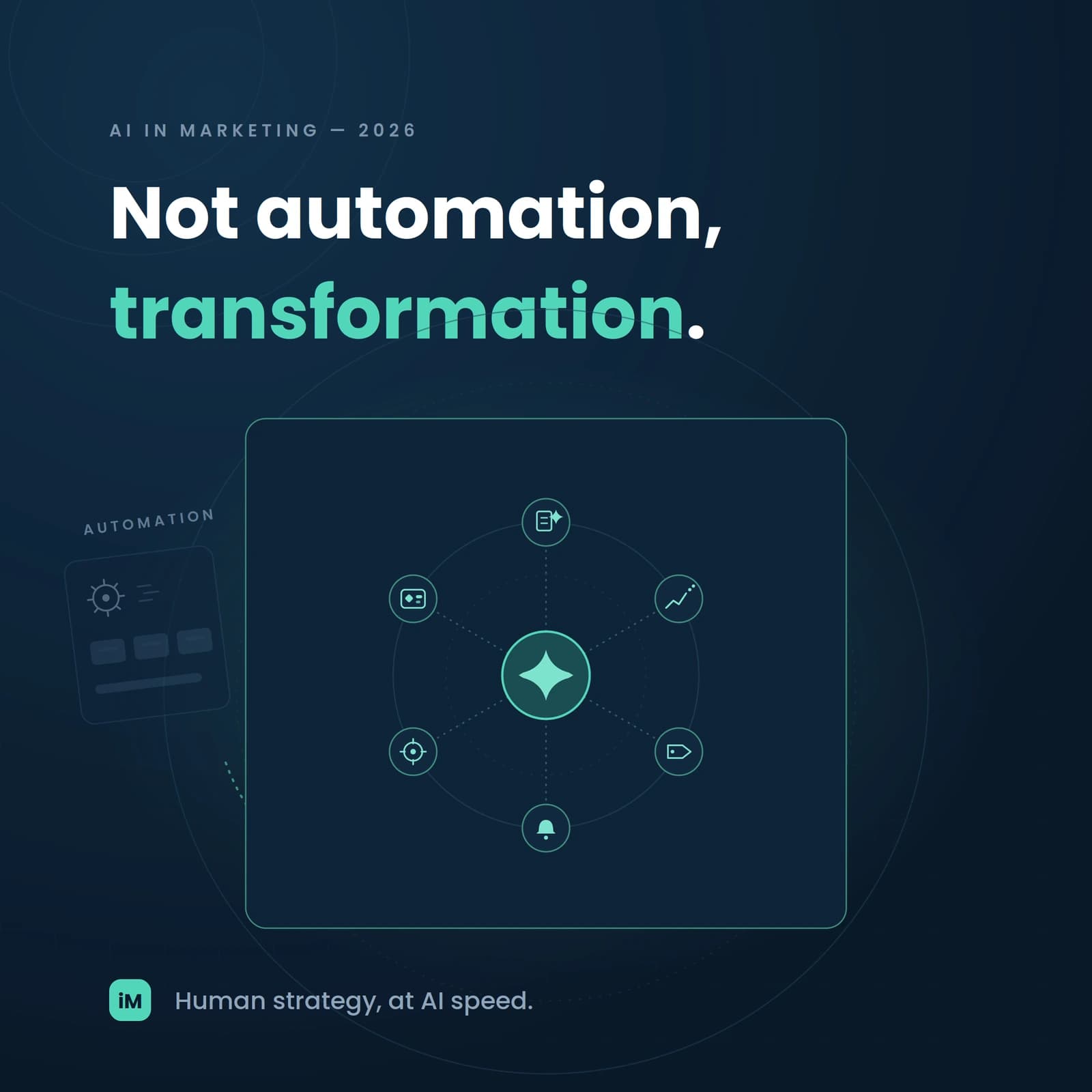
This is a decision list, not a technology list. Eight jobs, each with how the work used to be done, how it is done now, and what the gap between the two makes possible. At the end there is a section you rarely see in articles like this: what AI still cannot do.
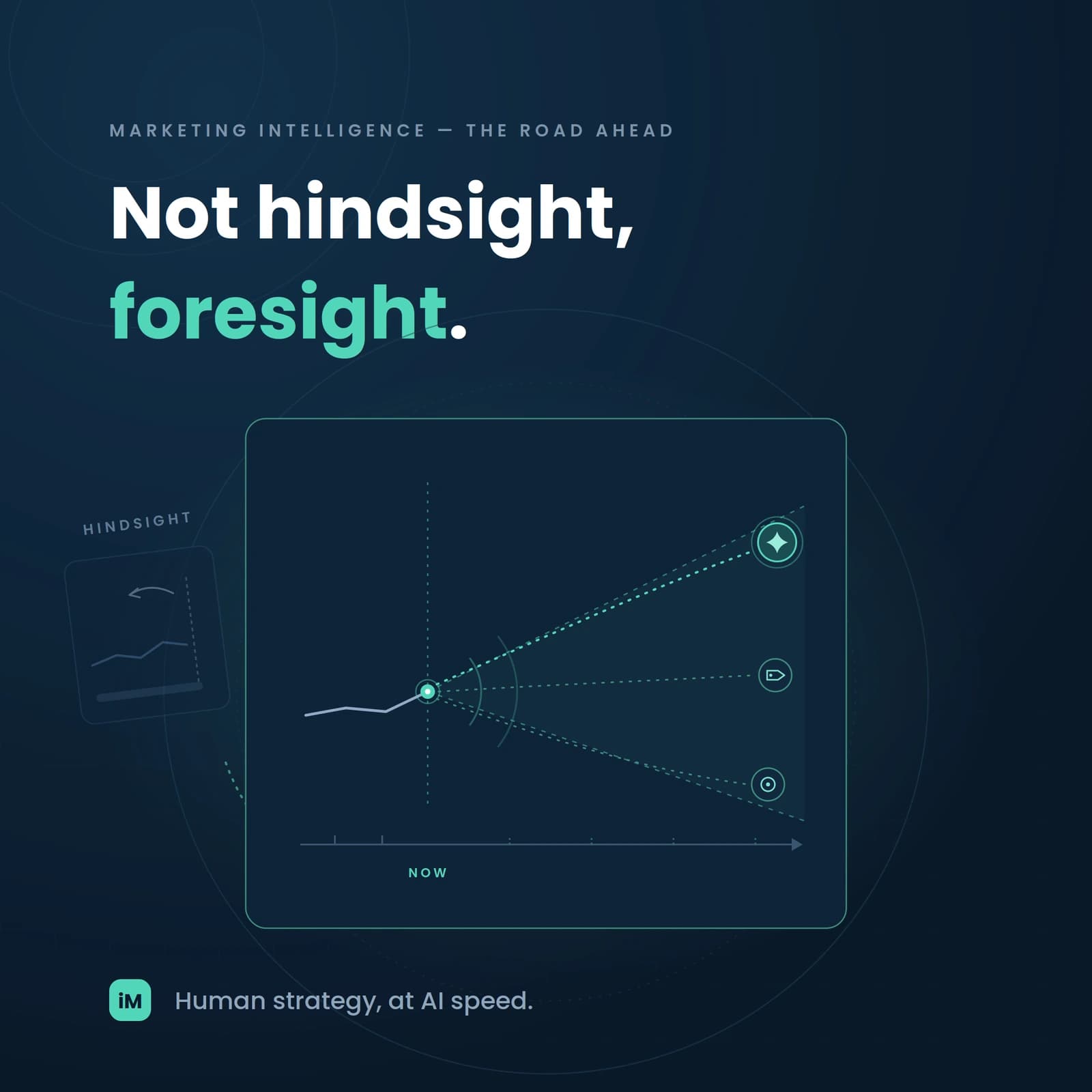
AI has had exactly one real effect on marketing and everything else is a derivative of it: it shortened the distance between a signal appearing and a decision being made on that signal. That distance used to be one reporting cycle long — month end, quarter end, year end. The decision arrived after the event had closed.
So the real question is not "can AI write content". The real question is: which decision can you now make earlier? That is the common thread through all eight items below.
Competitive analysis used to be a deck an agency or an intern spent weeks building, and half the information inside it was stale by the time it was ready. Now competitors' digital footprint, communication volume, brand visibility and campaign movements are tracked continuously, and change is flagged as it happens. The difference: when a competitor shifts gears you learn it the week it happens, not three months later from a dent in your own numbers.
The scale of a reputation crisis is set in hours, not months. A classic brand health study measures the residue after the event has already unfolded. AI changed two things here: making sense of mentions (is this negative, and about what) and recognising patterns (is this normal fluctuation, or is something starting). The output is not a dashboard — it is an alert that arrives in the right hour.
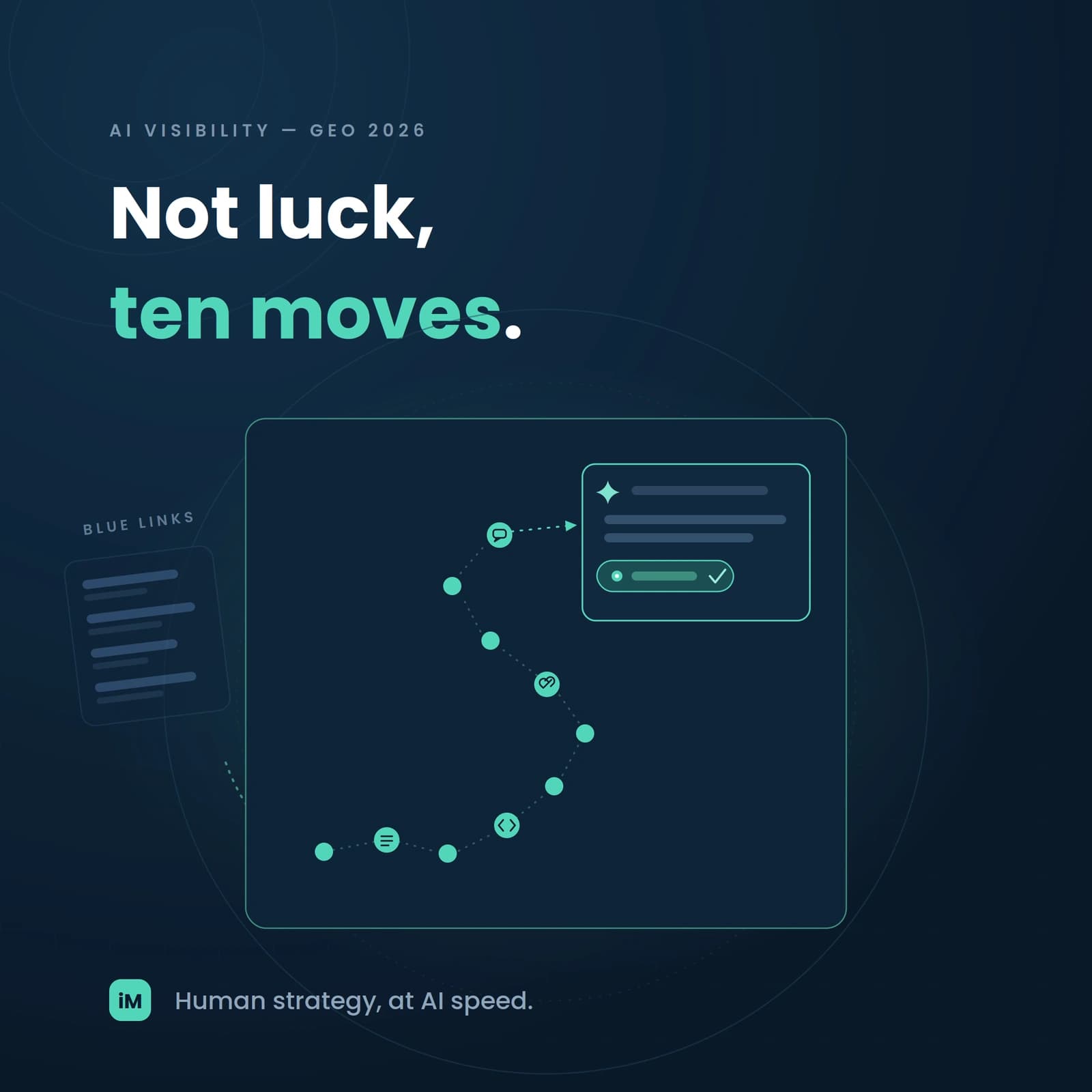
For twenty years marketing teams built functions around Google's first page. Now people ask an assistant and act on the brands named inside the answer — often without clicking through to any site at all. That created a new channel that has to be measured: do assistants know your brand, how do they describe it, and who gets recommended in your place? We covered this in a separate article as ten concrete moves.
There is no such thing as "our average customer" — an average is a number that covers up behaviours with nothing in common. AI made the customer base individually scorable: who creates value, who is quietly drifting away, who is winnable back, who is already gone. Knowing where budget should not go is worth as much as knowing where it should.
Campaign plans were built for a long time on an experienced person's instinct — which was often right, but neither repeatable nor defensible. Now past performance, competitor movement, seasonality and audience data can be weighed together to produce a recommendation on channel mix, timing and creative direction. The decision still belongs to a human, but now the reasoning arrives with a number attached.
A/B test finds the winning variant — but the winning variant is a compromise: the one that works best on average, which means best for nobody in particular. AI inverted that logic: instead of picking one winner, change the page in the moment based on where the visitor came from, what they looked at and how they behave. Instead of sending a cart abandoner one more email, show them a page that remembers them when they return.
Ask how a marketing budget was allocated and the honest answer is often "this is how it was last year". AI made the contribution of channels and activities separable. That moves the budget conversation with finance off narrative and onto numbers — which happens to be the meeting marketing leaders struggle with most.
Domain security, SSL, email authentication records and site speed were treated for years as "IT's job". They produce marketing outcomes directly: a slow site is lost conversion, a missing email record is the spam folder, a security gap is brand risk. Continuous scanning turned these checks from a once-a-year audit into a weekly health indicator.
This section exists for a reason: overstated promises are the single biggest thing eroding trust in this technology. AI does not do the following in marketing, and will not any time soon:
Accepting this list does not diminish AI. It does the opposite: it lets you use it where it genuinely works.
You can buy a separate tool for each of the eight jobs above — and that is what most companies do today. The result is eight panels that do not talk to each other and a team that cannot reconcile any of them. inMOLA gathers this work into a single decision layer: competitive intelligence, brand monitoring, AI visibility, customer scoring, campaign decisions, web personalisation, marketing mix and marketing security among 64 modules running in production.
The critical part is not the module count — it is that they share the same data: a signal surfaced in one module becomes the input to another and rolls up into a single score. So the answer to "how is our marketing doing" comes from one place instead of eight separate reports.
Trying to stand up all eight at once is the most common and most expensive mistake. Go in this order:
The AI revolution in marketing was never about taking the work away from people. It was about pulling the decision back to a moment when you can still affect the outcome. Everything else is detail.
Marketing Intelligence
Decision Intelligence
AI Visibility